
June 19, 2026
Annapurna Sanctuary Trek
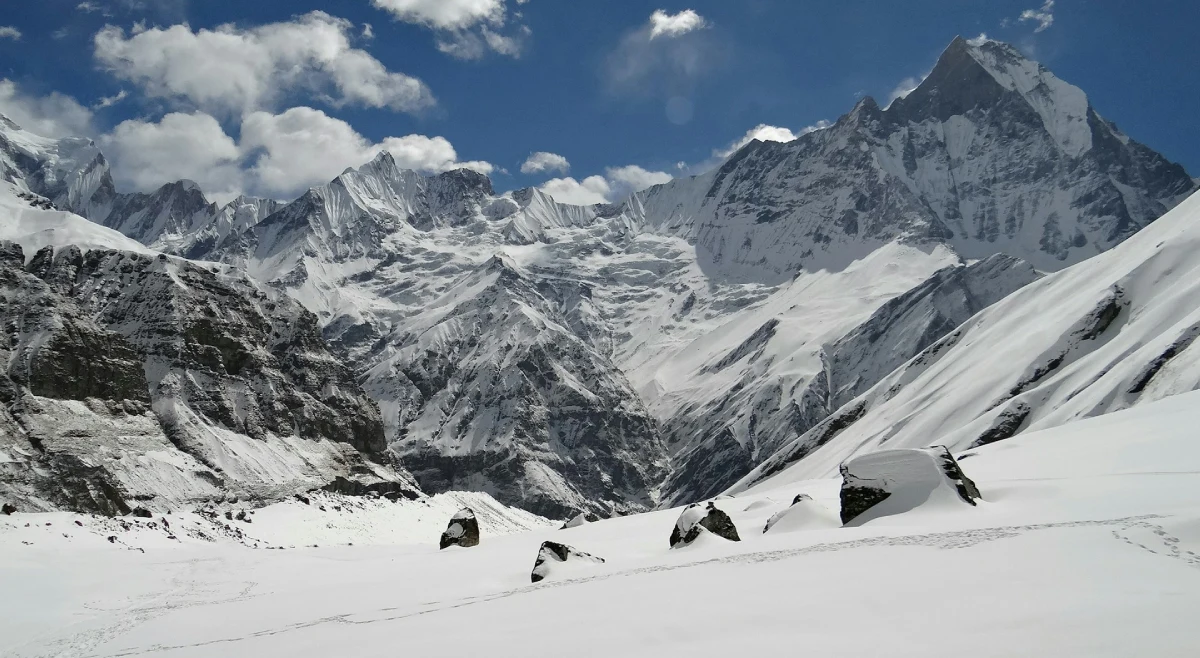
The Annapurna Sanctuary Trek can be rightly referred to as one of the most beautiful treks in Nepal where trekkers get a chance to experience walking in a natural amphitheater of Himalayan mountains which boasts some of the most famous peaks of the world. Annapurna I (8,091 m), Machhapuchhre (Fishtail), Hiunchuli, and Annapurna South make up the ring surrounding the Annapurna Sanctuary and providing a magnificent 360-degree view of a mountainous basin.
One of the best things about this trek is the possibility to see a great number of interesting things during a single journey. Along with stunning views of majestic mountains, trekkers can explore traditional Gurung villages, terraced farms, rhododendron forests, streams of water on their way up towards the sanctuary that lies in the high alpine zone.
This sanctuary at 4,000 meters above sea level offers wonderful views of snow-capped mountains and glaciers, however, despite the high altitude, this trek is still rather moderate in difficulty.
Everything you need to know about the Annapurna Sanctuary Trek is included in this complete guide, which features a map of the journey, distance to cover, duration of the trip, altitude details, difficulty levels, and budget details. Furthermore, this guide will tell you when the ideal time for visiting is, what benefits you can derive from going at different seasons, and the climate of the region. Moreover, a comparison between the Annapurna Sanctuary Trek and the famous Annapurna Base Camp Trek is also provided.
For all types of trekkers, whether first-timers or experienced ones, the Annapurna Sanctuary Trek is the ultimate Himalayan experience in Nepal.
What is Annapurna Sanctuary Trek?
The Annapurna Sanctuary Trek is a popular classic trek in the Himalayas. This trek offers visitors a chance to explore a glacial basin located on an altitude above 4,000 meters in the middle of the magnificent Annapurna mountain range. It is considered a holy ground because of its geography and spiritual significance and a sanctuary due to its environmental protection status in Nepal.
Unlike many other treks, Annapurna Sanctuary Trek offers an incredible natural formation. It is surrounded by a chain of mountains forming a 360-degree amphitheater around the valley. Annapurna I, Machhapuchhre, Hiunchuli, and Annapurna South create a natural boundary for this sanctuary.
This trek is one part of what is called a Himalayan sanctuary trek Nepal. In addition to amazing nature scenery, it involves a great amount of interaction with local culture and traditions. On the way, trekkers can visit villages of local tribes Gurung and Magar that have preserved their ancient way of life and hospitality until today. Stone-built houses, prayer flags and terraces fields are clear examples of the rich cultural heritage of this region.
Apart from cultural interactions, the trail passes through thick forests of rhododendrons and bamboo, waterfalls, and picturesque alpine areas. As the altitude changes, the scenery is drastically transformed to show icy valleys and scenic mountain ranges.
Ultimately, the Annapurna Sanctuary Trek is not only an exploration of a destination; rather, it is an experience in nature and spirituality as well.
Annapurna Sanctuary Trek Route Map
The trekking route to the Annapurna Sanctuary is well-established and follows a gradual ascent through diverse landscapes.
Main Route Overview:
- Nayapul / Siwai (starting point)
- Ghandruk
- Chhomrong
- Bamboo
- Dovan
- Deurali
- Machhapuchhre Base Camp (MBC)
- Annapurna Base Camp (ABC) / Sanctuary Core
Route Highlights:
- The trail begins in green hills and terraced farmland.
- It passes through dense rhododendron and bamboo forests.
- Gradually transitions into alpine terrain near the sanctuary.
Ghorepani Poon Hill Trek Connection
Many trekkers combine the Ghorepani Poon Hill Trek connection with the Annapurna Sanctuary route. Poon Hill offers a stunning sunrise view over Annapurna and Dhaulagiri ranges, making it a perfect warm-up trek before entering the sanctuary.
The return route usually follows the same path, though some variations go through Jhinu Danda, famous for its natural hot springs.
Annapurna Sanctuary Trek Distance, Duration & Altitude
Annapurna Sanctuary Trek Distance
Distance Covered on Annapurna Sanctuary Trek
Depending on various factors such as the specific route that one chooses, the starting point, and whether one intends to take some side trips during the expedition, the total trekking distance will vary. On average, trekkers can expect a distance covered during a round trip of about 70 km to 115 km.
Shorter itineraries will begin from either Nayapul or Siwai and travel straight to Annapurna Base Camp. Longer itineraries will have an extra stopover such as Ghorepani Poon Hill or Jhinu Danda hot springs. The journey involves a combination of stone stairways, forest paths, crossing of rivers, and climbing up slowly.
Annapurna Sanctuary Trek Duration
The typical duration of the trek ranges from 7 to 12 days, depending on the itinerary style and walking pace.
- 7–8 days itinerary: Suitable for experienced trekkers or those with limited time. This option follows a more direct route with fewer rest days.
- 9–12 days itinerary: A more balanced and recommended approach that allows proper acclimatization, better cultural exploration, and a more relaxed trekking rhythm.
Longer itineraries are especially beneficial for first-time trekkers in the Himalayas, as they reduce the risk of altitude sickness and provide more time to enjoy the landscapes and villages along the route.
Annapurna Sanctuary Trek Altitude
The altitude gain during the Annapurna Sanctuary Trek is gradual but significant, reaching a maximum elevation of 4,130 meters at Annapurna Base Camp, the heart of the sanctuary.
Key altitude points along the route include:
- Chhomrong: 2,170 meters (important gateway village)
- Bamboo / Dovan: 2,300–2,600 meters (forest zone)
- Deurali: 3,200 meters (transition to alpine terrain)
- Machhapuchhre Base Camp (MBC): 3,700 meters
- Annapurna Base Camp (ABC): 4,130 meters
Although the ascent is relatively gradual compared to other high-altitude treks, trekkers should still be cautious of Acute Mountain Sickness (AMS). Proper hydration, steady pacing, and acclimatization days are highly recommended to ensure a safe and enjoyable journey.
Annapurna Sanctuary Trek Difficulty Level
Annapurna Sanctuary Trek Difficulty is usually rated as moderate, making it one of the easier high-altitude Himalayan treks in Nepal. No technical climbing skills are required, but the trek requires a certain physical conditioning and stamina because of its constant ascent and elevation gain.
Why the trek is moderate
The first major reason why this trek is feasible for most trekkers is its well-developed trail network. The trekking route is clearly marked and well traveled, which means there are no difficulties with navigation. Another important element is the possibility to use tea houses along the whole trekking route, meaning that there is no need for camping and carrying bulky expedition equipment.
The gradualness of ascent is another aspect that should be mentioned. While the trek always goes to higher altitudes, it is carefully arranged in such a way that allows it to gradually adapt to elevation changes.
Main challenges on the trek
Despite being moderate, the trek still presents several physical challenges:
- Long uphill stone staircases: Especially in sections like Chhomrong, where continuous stone steps can be tiring on the knees and legs.
- Frequent ascents and descents: The trail is not flat, and trekkers often lose and gain elevation multiple times in a single day.
- High-altitude sections above 3,000 meters: As you move closer to Machhapuchhre Base Camp and Annapurna Base Camp, oxygen levels decrease noticeably.
- Weather variability: Conditions can change quickly in the Himalayas, with cold mornings, strong winds, or sudden cloud cover.
Who can do the Annapurna Sanctuary Trek?
This trek is suitable for a wide range of trekkers, including:
- Beginners with good physical fitness who are prepared for daily walking and altitude gain
- Experienced trekkers looking for a scenic and culturally rich Himalayan route
- Travelers capable of walking 5–7 hours per day with a steady pace
No prior trekking experience is required, but basic preparation such as cardio training, hiking practice, and stamina building is highly recommended.
Overall assessment
With proper planning, pacing, and acclimatization, the Annapurna Sanctuary Trek is achievable for most healthy individuals. It offers a perfect balance between challenge and comfort, making it an ideal introduction to high-altitude trekking in the Himalayas while still delivering an unforgettable adventure experience.
Best Time for Annapurna Sanctuary Trek
Timing plays a crucial role in the trekking experience.
Best Season to Do Annapurna Sanctuary Trek in Nepal
Spring (March to May)
- Blooming rhododendron forests
- Clear mountain views
- Moderate temperatures
- One of the most beautiful seasons
Autumn (September to November)
- Best overall weather
- Crystal-clear visibility
- Stable trekking conditions
- Peak trekking season in Nepal
Off-season trekking
Winter (December to February)
- Cold temperatures at higher altitudes
- Fewer crowds
- Snow-covered landscapes
Monsoon (June to August)
- Heavy rainfall
- Slippery trails
- Limited mountain views
Autumn and spring remain the best choices for the Annapurna Sanctuary Trek.
Annapurna Sanctuary Trek vs Annapurna Base Camp Trek
Many trekkers confuse these two routes, but they are closely related.
Similarities:
- Both lead to Annapurna Base Camp (4,130m)
- Same general region and trail system
- Stunning Himalayan views
Differences:
| Feature | Annapurna Sanctuary Trek | Annapurna Base Camp Trek |
| Experience type | Full sanctuary immersion | Direct ABC focus |
| Route style | More cultural + scenic | Shorter & direct |
| Duration | 7–12 days | 5–9 days |
| Crowd level | Less crowded | More popular |
Which one should you choose?
- Choose Sanctuary Trek for a deeper cultural and natural experience
- Choose ABC Trek for a shorter and more direct Himalayan adventure
Guide and Porter Cost for Annapurna Sanctuary Trek
Getting a guide or porter for the Annapurna Sanctuary Trek is advisable because of its benefits in terms of safety and comfort and cultural experience. Although the trekking trail is fairly well-defined, having a local guide makes all the difference when it comes to safety and enjoying the trip.
Guide’s Fee
On average, a licensed trekking guide would charge between USD 25-35 per day. The role of the guide is not only to show you the way; he is also responsible for controlling the pace of your trekking and informing you of the altitude, climate, and other relevant issues. However, the most important thing that guides are responsible for is being able to deal with emergencies, such as signs of altitude sickness.
Porter Cost
Porter’s pay varies between $18 to $25 based on distance, seasons, and load carried. The porters normally carry 15 to 25 kilograms of baggage, making it easy for trekkers to hike with just a small backpack. This helps save one from much physical exhaustion especially during tough and steep climbs through stone stairs.
Why hire a guide or porter?
There are several important advantages to hiring local support:
- Navigation assistance: Even though the route is popular, weather changes or forest sections can sometimes make navigation confusing.
- Local cultural insight: Guides share valuable knowledge about Gurung villages, traditions, festivals, and Himalayan lifestyle, making the trek more meaningful.
- Safety in remote areas: In case of injury, altitude sickness, or weather issues, having a guide ensures quick and informed decision-making.
- Reduced physical burden: Porters carry your heavy backpack, allowing you to focus on enjoying the scenery and maintaining your energy.
Nepal trekking packages option
Many trekkers also prefer booking Nepal trekking packages that include everything in one arrangement—permits, accommodation, meals, guide, and porter services. These packages offer a hassle-free experience, especially for first-time visitors, as they eliminate the need to manage logistics on the trail.
Choosing a package can also help with better cost control and smoother coordination throughout the journey, making the overall trekking experience more organized and stress-free.
Is Annapurna Sanctuary Trek Worth It?
Yes—absolutely. The Annapurna Sanctuary Trek is widely considered one of the most rewarding trekking experiences in Nepal, offering a rare combination of dramatic mountain scenery, cultural richness, and manageable trekking difficulty. It is a journey that delivers a true Himalayan experience without requiring technical climbing skills or extreme expedition-level preparation.
Key highlights:
- 360-degree mountain views inside a natural amphitheater
- Close-up view of Annapurna I and Machhapuchhre
- Rich Gurung cultural experience
- Diverse landscapes from forests to glaciers
Why it stands out:
When compared to other trekking routes in Nepal that involve the Himalayas, one of the most unique trekking routes is the Annapurna Sanctuary Trek. This trek does not require one to have any technical skills or be physically fit to enjoy the spectacular views of the mountains.
This is because it is highly supported by the teahouses along the trail and the terrain is fairly easy for everyone.
Connection with Other Treks
Annapurna Base Camp Trek
The Annapurna Sanctuary Trek shares the final destination with the Annapurna Base Camp Trek, making them closely connected experiences.
Ghorepani Poon Hill Trek Connection
Many trekkers combine this route with Poon Hill, known for its sunrise view over Annapurna and Dhaulagiri ranges. This combination enhances the overall trekking experience.
Permits Required for Annapurna Sanctuary Trek
Two main permits are required:
- Annapurna Conservation Area Permit (ACAP)
- TIMS Card (Trekkers’ Information Management System)
These permits help support conservation and ensure safe trekking management in the region.
Packing List for Annapurna Sanctuary Trek
Essential items include:
Clothing:
- Thermal layers
- Waterproof jacket
- Fleece or down jacket
- Trekking pants
Gear:
- Trekking boots
- Backpack (30–50L)
- Sleeping bag (for colder months)
Essentials:
- Sunscreen and sunglasses
- First aid kit
- Water purification tablets
- Trekking poles
Tips for a Successful Annapurna Sanctuary Trek
- Maintain steady walking pace to avoid altitude sickness
- Stay hydrated throughout the trek
- Acclimatize properly at higher elevations
- Hire a local guide for better safety and navigation
- Check weather conditions before starting
Conclusion
Annapurna Sanctuary Trek is one of the most popular treks in the Himalayas of Nepal, which gives you all the things that one can expect from trekking in Nepal, from natural beauty to adventure and culture. Right from the green valley to Annapurna Base Camp, everything on this trek is magical.
It is ideal for both beginners as well as experienced trekkers. If you have decided to go for any trekking package in Nepal, then Annapurna Sanctuary Trek is something that should be considered as your first choice. It is not just a trek—it is a journey into one of the most spectacular natural sanctuaries in the world.