trip duration
Trip Duration 08 Days
trip duration
Trek Area Langtang Region
trip duration
Suitable Season Spring (March to May) & Autumn (September to November)
trip duration
Difficulty Level Easy to Moderate
trip duration
Start/End Point Syabrubesi/Syabrubesi
trip duration
Trekking Hour 5-6 in a day
trip duration
Transportation Reserve Jeep and Porter on 1:2 ratio
trip duration
Highest Altitude Tserko Ri 4,985M
trip duration
Group Size 2 to 10 pax.
trip duration
Accommodation Hotel in Cities (on request) & Tea-house lodge during the trek

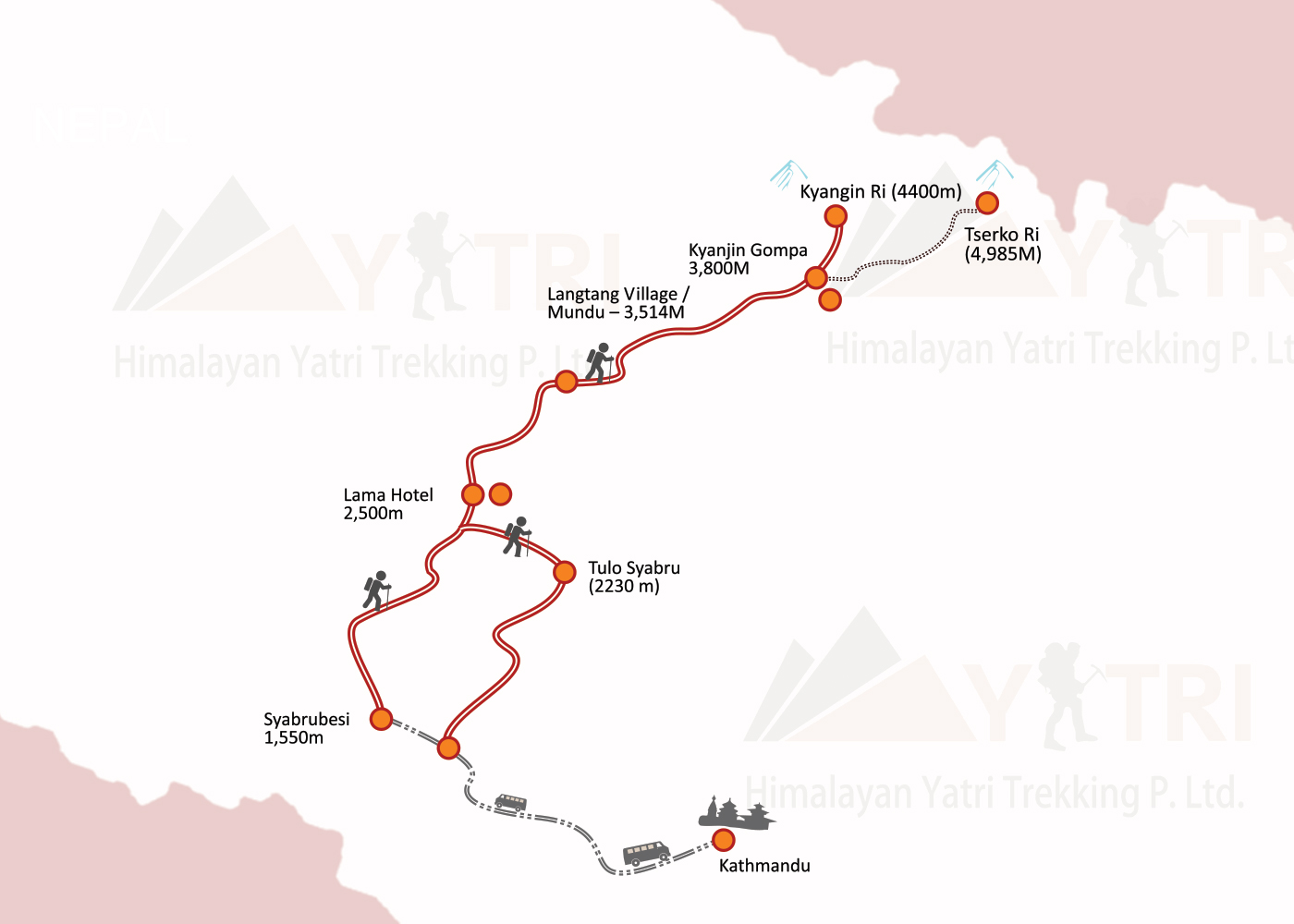
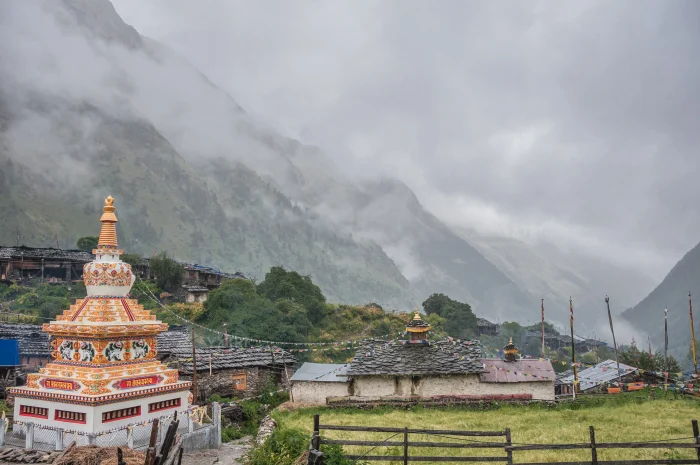
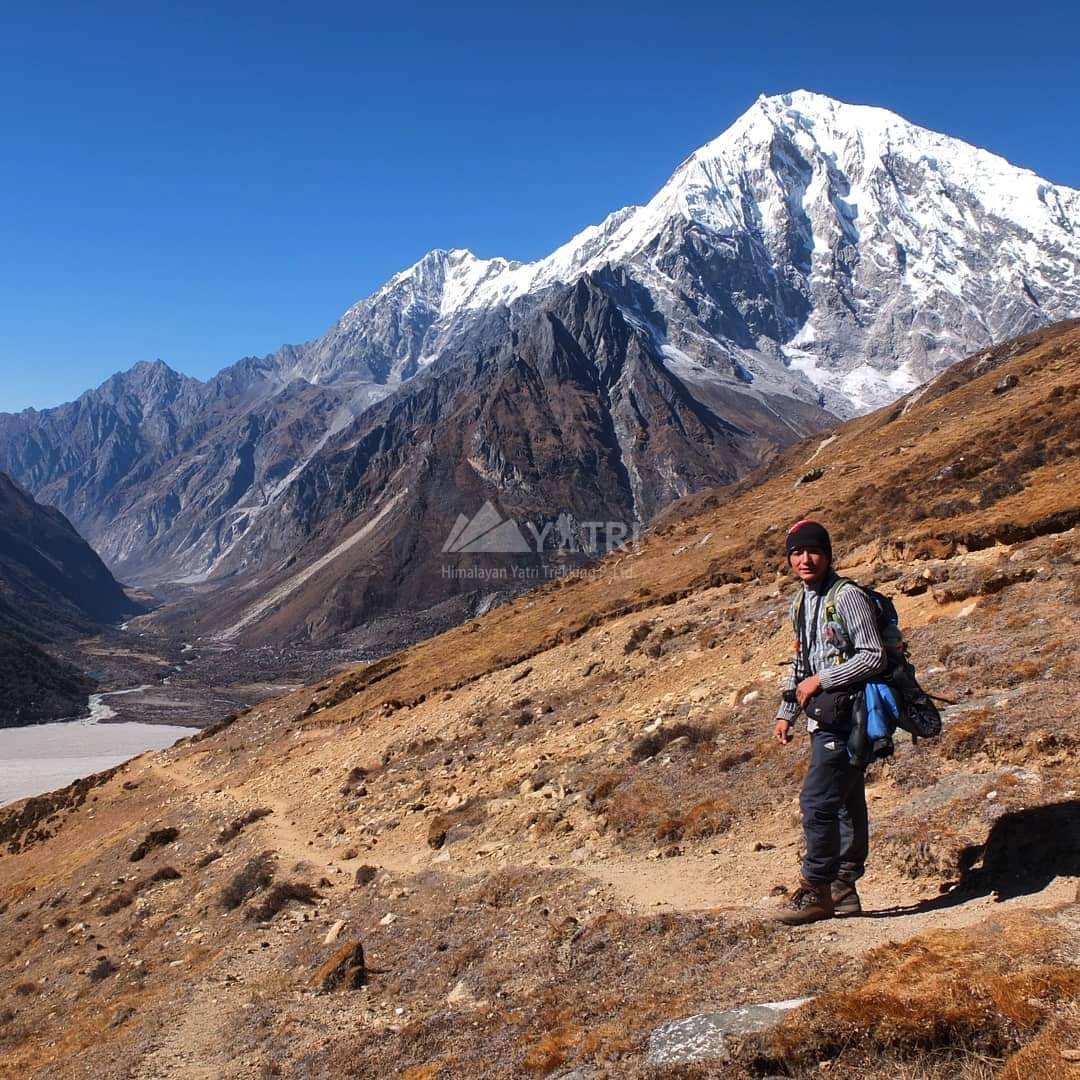
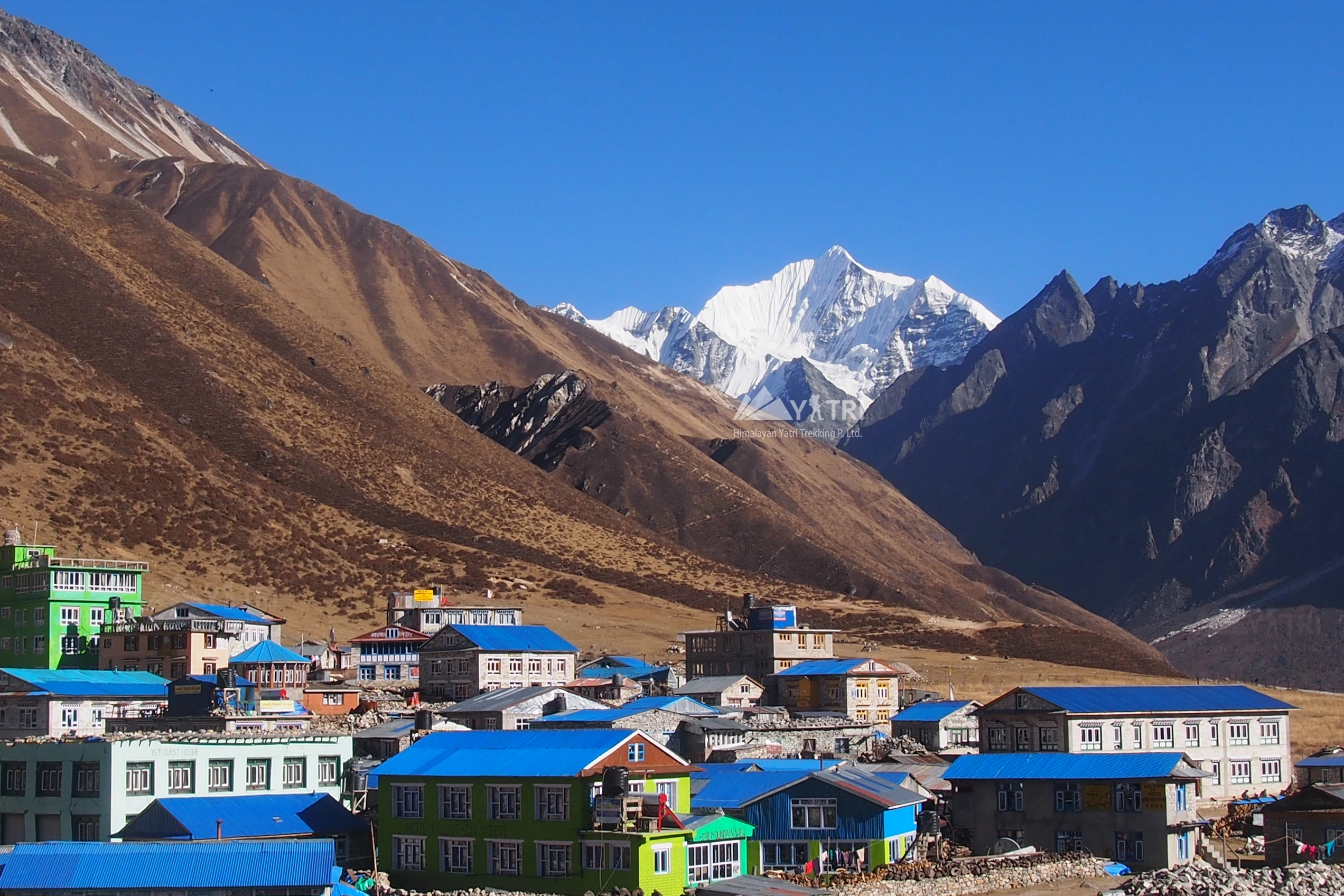
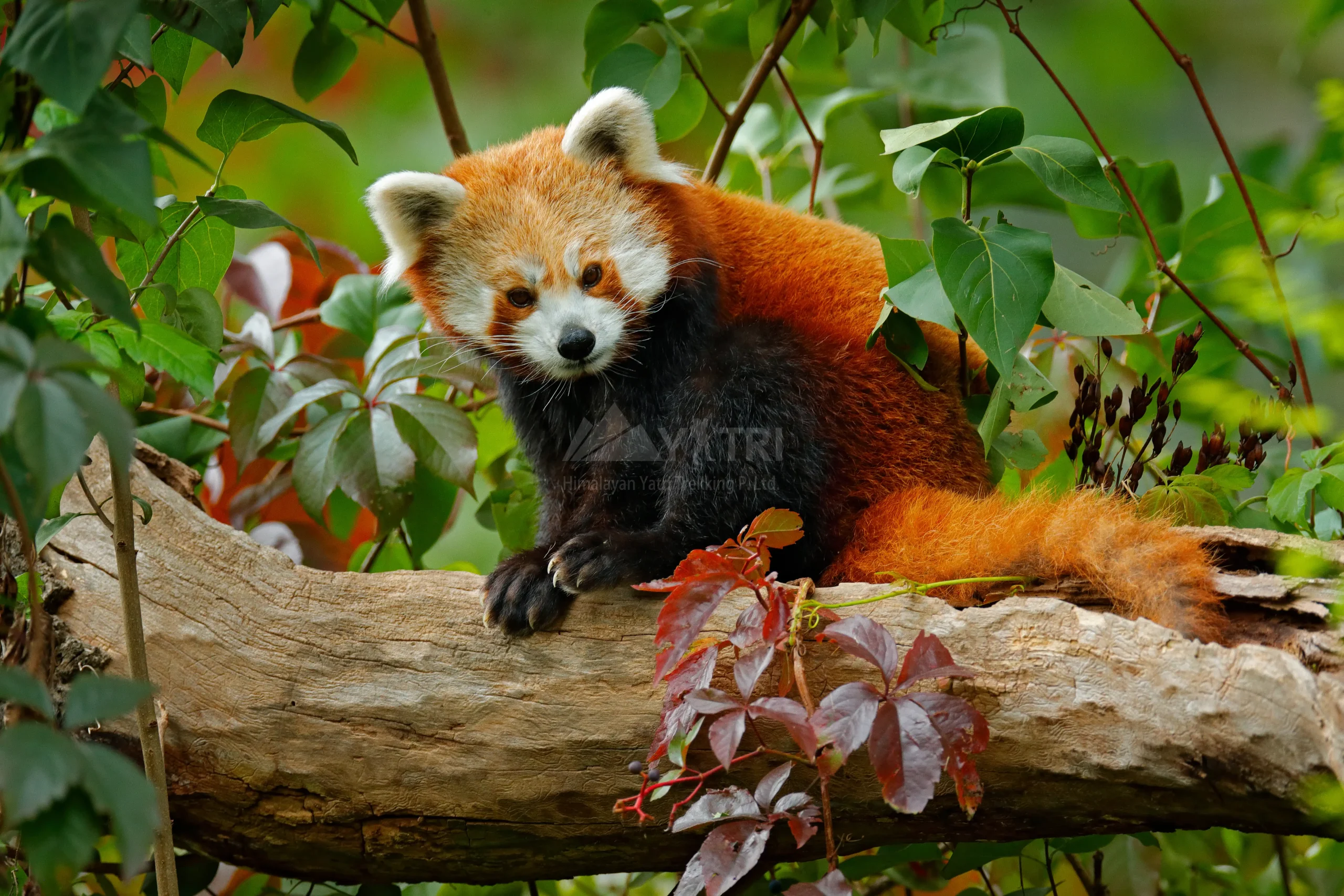
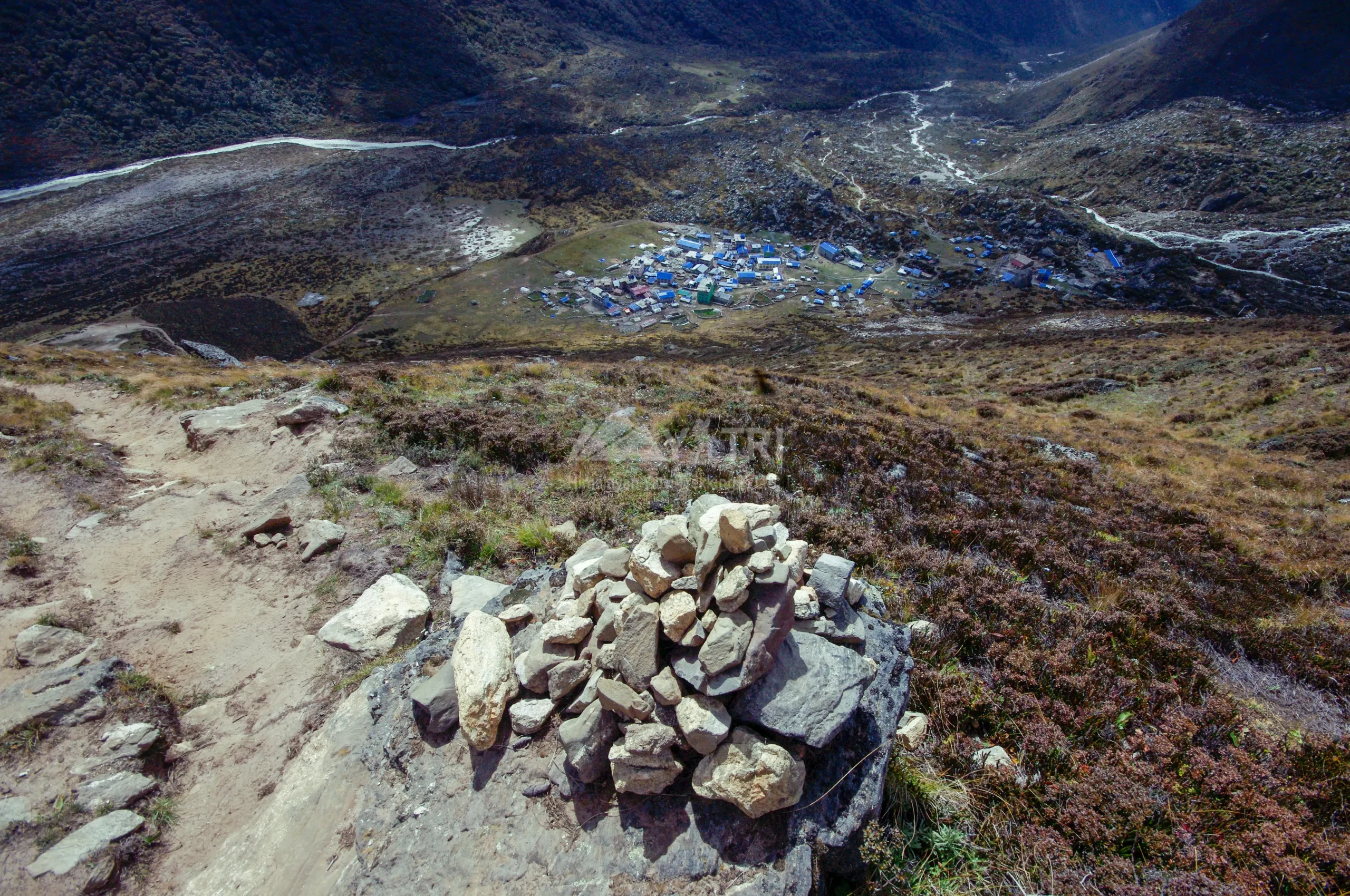
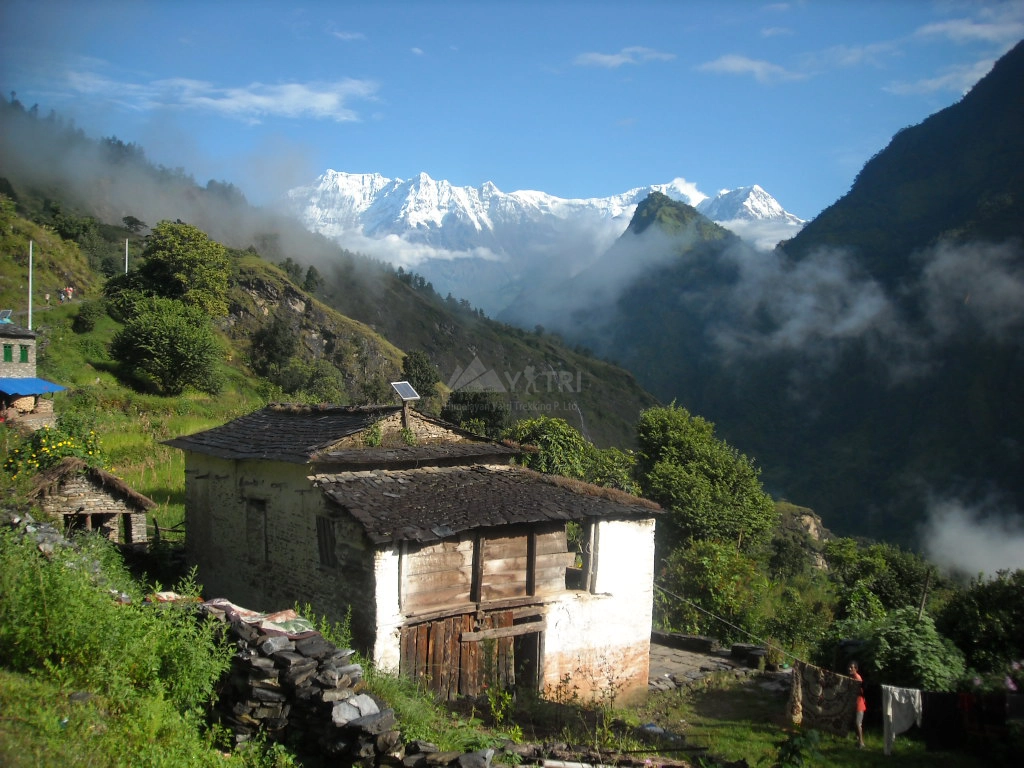
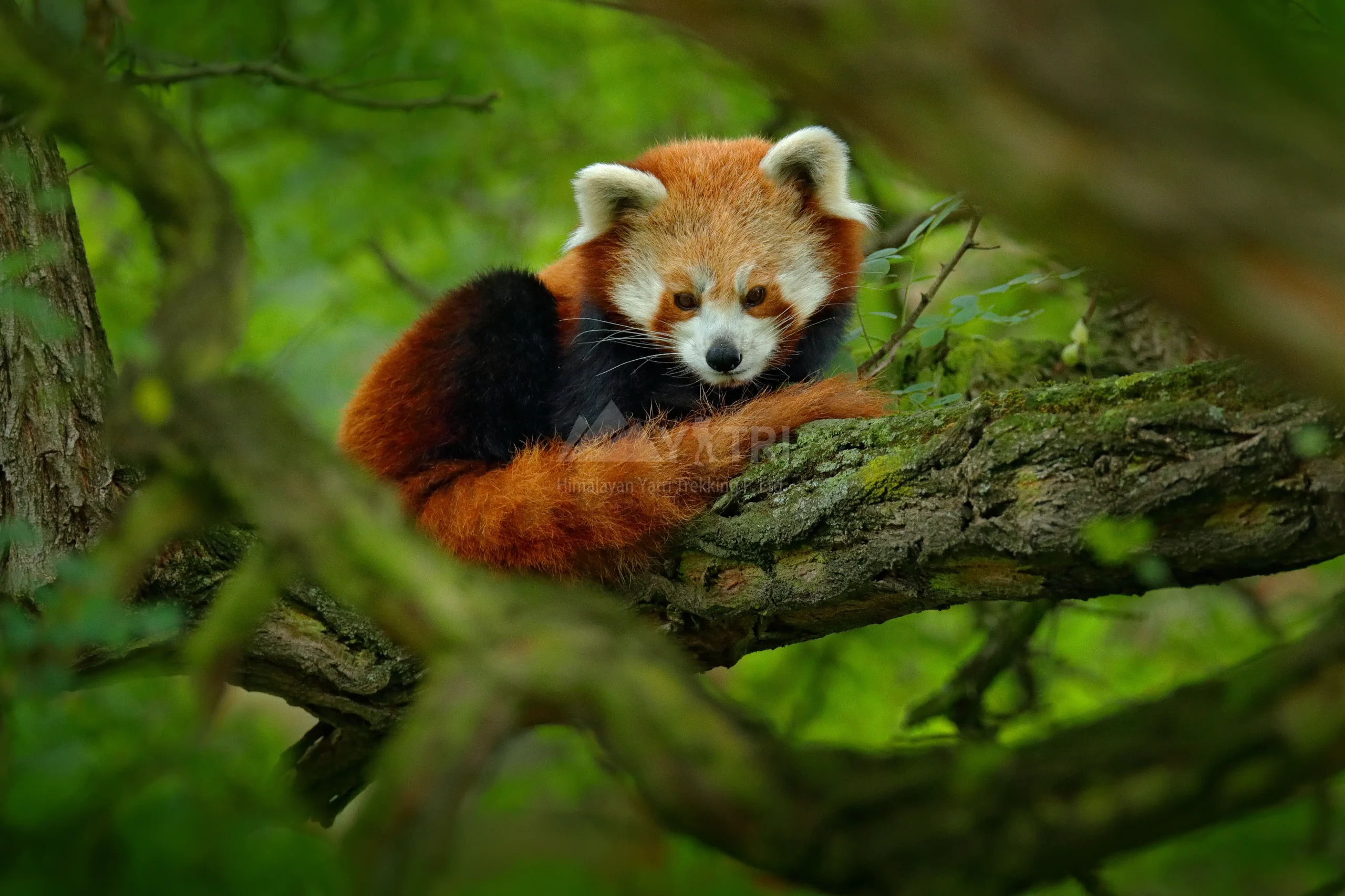
Framed by the ridgelines of Langtang National Park, the Langtang Valley trek is a compact Himalayan journey that blends forest, culture, and big-mountain views. Starting with a drive to Syabrubesi (≈1,550m), we follow the Langtang Khola through bamboo, oak, and rhododendron forests toward Lama Hotel (≈2,500m), where langur monkeys and—if we’re lucky—red pandas inhabit the slopes. The valley opens near Ghodatabela, revealing the dramatic icefalls of Langtang Lirung (7,227m) as we continue to Langtang Village/Mundu (≈3,500m), rebuilt with resilience after the 2015 earthquake.

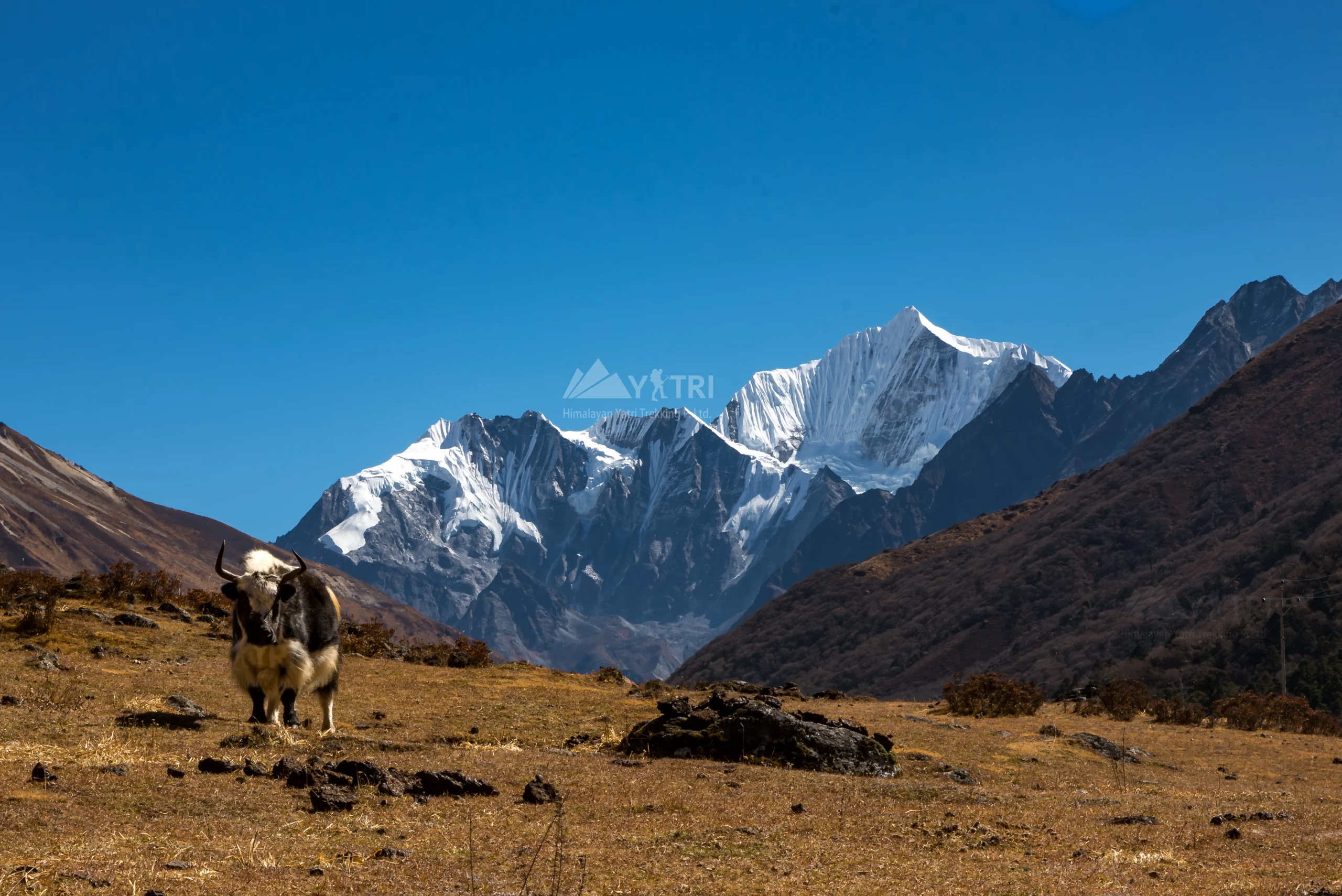
A short, scenic day leads to Kyanjin Gompa (≈3,900m), a stone-and-prayer-flag hamlet ringed by glaciers and peaks. Here we acclimatize with options: a summit of Kyanjin Ri (≈4,773m) or the fuller panorama from Tserko Ri (≈4,984m), where the skyline takes in Langtang Lirung, Dorje Lakpa, Yala Peak, and, on clear days, Shishapangma across the border. Along the way we visit a local monastery and the yak-cheese factory, and share warm hospitality in family-run teahouses.

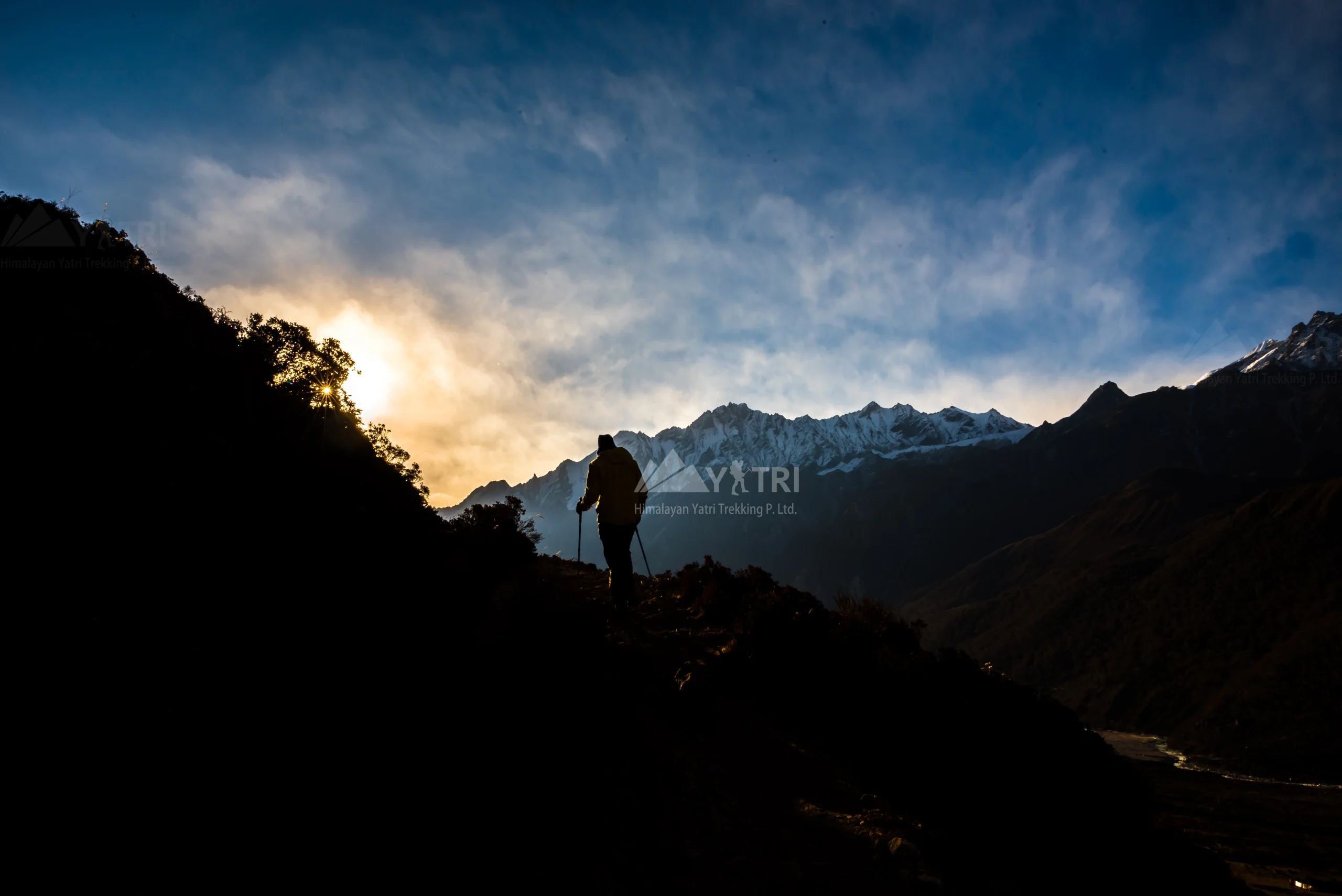
Daily walking is typically 5–7 hours, with a steady altitude profile for comfort and safety. Best seasons are spring (rhododendrons, stable views) and autumn (crisp skies). Our guide team manages permits, pace, and safety throughout—so you can focus on the rhythm of the river, village life, and the ever-widening horizons.

Detailed Itinerary

Day 01

Drive Kathmandu to Syabrubesi – 1,550m

Highlights of the day: Scenic countryside drive via Trishuli Bazaar and Dhunche. The journey offers views of Ganesh Himal (7,422m), terraced fields, and riverside landscapes before reaching Syabrubesi, the gateway to Langtang National Park.

Trip Facts
Max. Altitutde 1,550M
Trip Facts
Meal Plan Lunch, Dinner, Hot drinks
Trip Facts
Accomodation Lodge
Trip Facts
Activity 7–8 hrs drive (approx. 122 km, mountain road)
Day 02

Trek Syabrubesi to Lama Hotel – 2,500m

Highlights of the day: Trek along the Langtang Khola, crossing suspension bridges and passing through subtropical forests with oak, rhododendron, and bamboo. Keep an eye out for Himalayan wildlife such as langurs and red pandas.

Trip Facts
Max. Altitutde 2,500M
Trip Facts
Meal Plan Breakfast, Lunch, Dinner, Hot drinks
Trip Facts
Accomodation Lodge
Trip Facts
Activity 6–7 hrs trek, gradual uphill
Day 03

Trek Lama Hotel to Langtang Village / Mundu – 3,514M

Highlights of the day: The trail gradually climbs through forest, then opens up to alpine meadows near Ghodatabela (3,030m). First close-up views of Langtang Lirung (7,227m). Continue through Tamang villages to reach Langtang Village (rebuilt after the 2015 earthquake) or nearby Mundu.

Trip Facts
Max. Altitutde 3,514M
Trip Facts
Meal Plan Breakfast, Lunch, Dinner, Hot drinks
Trip Facts
Accomodation Lodge
Trip Facts
Activity 6–7 hrs trek
Day 04

Trek Langtang Village / Mundu to Kyanjin Gompa – 3,800M

Highlights of the day: A short but spectacular day. Pass mani walls, prayer wheels, and chortens as the valley widens. Arrive at Kyanjin Gompa, home to an ancient monastery and a yak-cheese factory. Stunning views of Dorje Lakpa (6,966m), Langtang Lirung, and Langshisa Ri.

Trip Facts
Max. Altitutde 3,800M
Trip Facts
Meal Plan Breakfast, Lunch, Dinner, Hot drinks
Trip Facts
Accomodation Lodge
Trip Facts
Activity 3–4 hrs trek, gentle ascent
Day 05

Kyanjin Gompa – Acclimatization & Day Hike to Tserko Ri (4,985M) or Kyanjin Ri (4,773M)

Highlights of the day: Optional hikes for panoramic Himalayan views.

  • Tserko Ri (4,985M): Best sunrise spot with a 360° panorama of Langtang Himalaya, Ganesh Himal, Shishapangma (8,013m in Tibet).
  • Kyanjin Ri (4,773M): Shorter climb but equally rewarding.

Trip Facts
Max. Altitutde 4,985M
Trip Facts
Meal Plan Breakfast, Lunch, Dinner, Hot drinks
Trip Facts
Accomodation Lodge
Trip Facts
Activity 6–8 hrs hike (depending on chosen viewpoint)
Day 06

Trek Kyanjin Gompa to Lama Hotel – 2,500M

Highlights of the day: Retrace steps along the Langtang Khola. Descend through alpine meadows, Tamang villages, and rhododendron forests. Easier walking with changing landscapes.

Trip Facts
Max. Altitutde 2,500M
Trip Facts
Meal Plan Breakfast, Lunch, Dinner, Hot drinks
Trip Facts
Accomodation Lodge
Trip Facts
Activity 6–7 hrs trek, mostly downhill
Day 07

Trek Lama Hotel to Thulo Syabru – 2,260M

Highlights of the day: Trail descends through forested slopes and villages before climbing up to Thulo Syabru, a beautiful Tamang settlement with traditional houses and monasteries. Fantastic views of Ganesh Himal and Langtang Himal.

Trip Facts
Max. Altitutde 2,260M
Trip Facts
Meal Plan Breakfast, Lunch, Dinner, Hot drinks
Trip Facts
Accomodation Lodge
Trip Facts
Activity 5–6 hrs trek
Day 08

Trek Thulo Syabru to Sano Bharku and drive back to Kathmandu (1,400M)

Highlights of the day: Short final trek to Sano Bharku, we walk through terrace fields, forest and descend the local trail until Sano Bharku. Scenic road journey back to Kathmandu, completing your Langtang adventure.

Trip Facts
Max. Altitutde Sleep at 1,400m
Trip Facts
Meal Plan Breakfast, Lunch
Trip Facts
Accomodation (Hotel in Kathmandu on request)
Trip Facts
Activity 3–4 hrs trek, 6–7 hrs drive

Additional Infromation

Cost Included

  • Airport Transfers: Private car service for airport pick‑up and drop‑off.
  • Ground Transportation: Convenient travel options, either by public bus or private reserved jeep.
  • Meals: Three freshly prepared meals each day, with seasonal fruits, tea, and coffee.
  • Accommodation: Best available teahouse lodges on a shared basis during the trek.
  • Guides & Porters: Licensed, English‑speaking trekking guide and dedicated porters to support your journey.
  • Crew Insurance: Comprehensive insurance coverage for our support team, including meals and daily wages.
  • Permits & Entry Fees: All necessary trekking permits, entry cards and monuments fees arranged by us.
  • Trekking Gear: Company‑provided duffel bags and trekking poles (to be returned after the trip).
  • Taxes & Service Charges: All official government taxes and agency service fees included.

Cost Excluded

  • International Travel: Flights to/from Nepal, visa fees, and airport taxes.
  • Personal Gear: Your own trekking equipment (except company duffel bags and trekking poles).
  • Beverages: Alcoholic and bottled drinks (tea and coffee are included).
  • Personal Insurance: Travel, accident, and medical emergency evacuation insurance.
  • Custom Duties: Nepal customs duty for goods imported by air or road.
  • Personal Expenses: Laundry, internet, and other items of personal nature.
  • Tips/Gratuities: Tips for guides and porters (not mandatory, but warmly appreciated).

TREKKING EQUIPMENT GUIDE FOR TREKKING IN THE HIMALAYAS

1) Head Wear

  • Fleece & woollen hat: Essential for cold mornings/evenings; covers ears to prevent frostbite.
  • Sun hat & sunglasses: Wide-brimmed hat for sun protection; sunglasses with UV400/glacier lenses for high altitude glare.
  • Lip balm & sunblock (SPF 30–50): Prevents cracked lips and sunburn; UV rays are stronger at altitude.
  • Scarf/Buff: Multipurpose: protects against dust, wind, and can be used as neck warmer.

2) Hands Wear

  • Wind fleece gloves: Lightweight warmth for mild conditions.
  • Waterproof insulated gloves: For snow or rain; keeps hands dry and warm.
  • Trail map & guidebook: Help you connect with the trail beyond just following and cultural insights.
  • Camera & reading books: Capture memories and relax during rest days/free time.
  • Trekking poles/walking sticks: Reduce knee strain, improve balance on steep terrain/descents.
  • Playing cards (optional): Great bonding within a group, fun and laughter.

3) Body Wear

  • Loose trekking T-shirts & pants: For daytime walking, Quick-dry, breathable fabrics.
  • Long-sleeve fleece T-shirt: Protects from sun and provides warmth.
  • Trousers & waterproof jackets/pants: Essential when clouds roll in, rain and wind protection.
  • Warm jacket (Down jacket): Lightweight but highly insulating; cozy armour above 3,500m.
  • Raincoat/rain cover: For sudden showers, especially in monsoon season.
  • Undergarments: Quick-dry, comfortable; pack enough for hygiene.

4) Foot Wear

  • Warm woollen socks: Several pairs; keep feet dry and warm.
  • Trekking boots: Durable, waterproof, and designed for comfort with strong ankle support.
  • Camp shoes/sandals: Comfortable for evenings in lodges or camp.
  • Crampons & gaiters: For icy trails or deep snow; gaiters prevent snow/mud entering boots.

5) Sleeping

  • Sleeping bag (-15°C rating): Necessary for high-altitude lodges where blankets may be insufficient.
  • Silk liner: Adds warmth and keeps sleeping bag clean.
  • Pillow/sleeping pad: Extra comfort, especially in basic/simple lodges or camping treks.

6) First-Aid Kit

  • Personal medicines: For fever, cold, headaches, stomach issues.
  • Moleskin/blister pads: Prevent painful blisters.
  • Diamox (consult your doctor): Helps prevent altitude sickness.
  • Other medicines: As per personal health needs (consult physician before trek).

7) Toiletries & Personal Hygiene

  • Light towel & face cloth: Quick-dry preferred.
  • Toothbrush, paste & shavers (razor): Basic hygiene.
  • Shampoo & conditioner: Small travel bottles.
  • Face & body moisturizer: Prevents dry skin at altitude.
  • Comb & nail clipper: Personal grooming.
  • Toilet paper: Not available in lodges or camp.
  • Hand sanitizer: Essential for hygiene.
  • Eco-friendly soap: to protect the environment.
  • Feminine hygiene products: Pack sufficient supplies for the whole trek.

8) Backpack

  • Day backpack (40–45L): For essentials jacket, snacks, water, camera, money belt.
  • Rain cover: Protects gear during showers.

9) Kit Bag

  • Duffel bag (max 12kg): Preferred by porters; lockable and waterproof.

10) Important Documents

  • Extra passport photos: Needed for permits.
  • Photocopies of passport: As backup.
  • Travel insurance papers: Make sure for your trekking/altitude is covered; carry policy number.

11) Others

  • Camera with extra batteries/charger & memory card: Cold drains batteries quickly.
  • Headlamp/torch with spare batteries: For early starts, nights or power cuts.
  • Money belt/purse: Keep cash, documents safe.
  • Energy/protein bars: Quick energy boost on trail.
  • Water bottles (2 liters total): Essential for staying hydrated throughout the trek.
  • Water purification tablets/filter: Safe drinking water in remote areas.

Ready to Start Your Journey?

Customize your own travel plans based on your needs and preferences.

Plan your trip
chat-in-website
Need Help? Chat with us
chat-in-website
Need Help? Chat with us